Choosing a professional general construction contractor in Dubai matters for both residential and commercial projects.A construction project can look simple on paper: approve a design, hire a contractor, build the property, and collect the keys. Reality usually contains a few more moving parts.
Architects, structural engineers, MEP specialists, suppliers, subcontractors, inspectors, project managers, labour teams, permits, materials, schedules, and budgets all need to work together. Miss one important detail and a small problem can quickly become an expensive one.
A general contractor does much more than arrange workers on site. The contractor manages construction activities, coordinates different trades, follows approved plans, controls quality, manages procurement, supports inspections, and works toward completing the project safely and correctly.
For property owners and developers, understanding what a contractor actually does makes it much easier to choose the right company.
What Does a General Construction Contractor in Dubai Do?
A general construction contractor manages the physical delivery of a building project. The exact scope depends on the contract, but the contractor commonly coordinates site preparation, structural construction, blockwork, waterproofing, mechanical and electrical services, plumbing, flooring, ceilings, painting, doors, windows, joinery, external works, testing, and final handover.
Dubai Municipality classifies Building Contracting as engineering contracting activity 452001. The Municipality also maintains licensing and classification requirements for contracting companies operating in Dubai.
This matters because construction is a regulated professional activity. Anyone can print “construction company” on a business card. Delivering regulated building work legally and professionally requires considerably more than access to a printer.
Residential Construction in Dubai Requires More Than Building a House
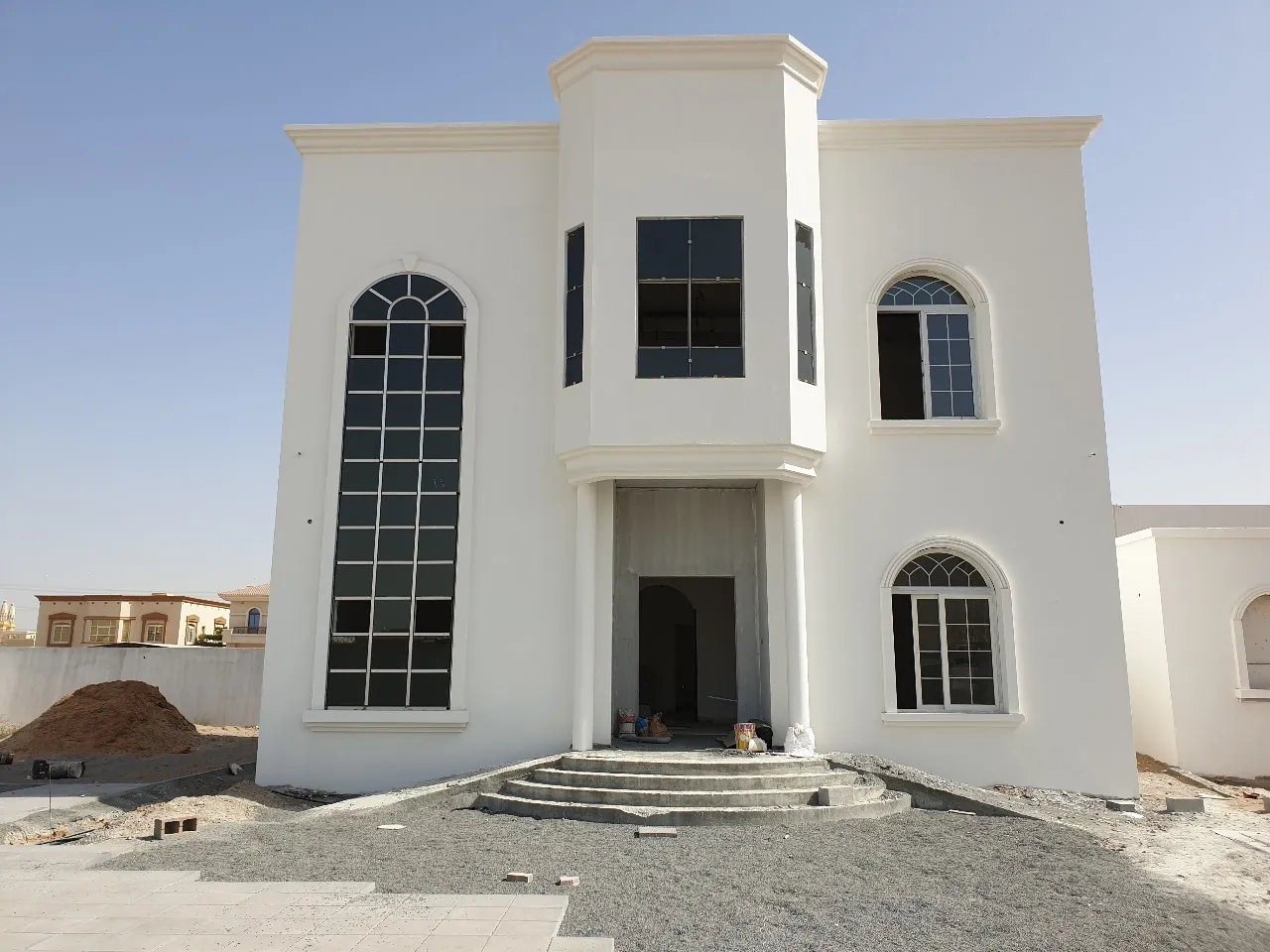
Residential projects can include private villas, investment villas, extensions, major structural alterations, and other forms of housing construction. Homeowners naturally focus on visible features such as kitchens, bathrooms, flooring, windows, and interior finishes. A competent residential contractor must also pay attention to everything behind those finishes. Structural work, waterproofing, electrical distribution, drainage, water supply, insulation, air-conditioning coordination, and other building systems influence how the property performs long after the decorators leave.
Dubai Municipality’s Building Permit Procedures specifically include requirements for private and investment villas as well as other categories of buildings. The process covers building permits, technical inspections, and completion certificates. For homeowners, this means construction should follow an organised technical process rather than a series of independent jobs. A beautiful bathroom is less impressive when someone needs to remove half of it six months later to reach a badly coordinated pipe.
Commercial Construction in Dubai Has Different Priorities
Commercial construction can include offices, retail spaces, restaurants, warehouses, public buildings, and other business properties. These projects often involve different operational requirements from residential buildings. A commercial property may need specialist mechanical systems, larger electrical loads, fire and life-safety coordination, durable finishes, accessibility considerations, or layouts designed around customers and employees.
The contractor also needs to manage construction around the intended business use. An office needs to function as an office. A restaurant needs services that support food preparation and customer areas. A retail property needs to accommodate displays, storage, circulation, and operational equipment.
The best commercial construction contractor in Dubai therefore does not simply repeat a residential construction approach inside a larger building. The contractor coordinates the project around its actual purpose.
Construction Should Start With Approved Information
Good construction begins before concrete reaches the site. The contractor and consultant need clear drawings, specifications, approvals, and defined responsibilities. Dubai Municipality states that its building permit procedures exist to help apply approved specifications and quality standards that support building and structural safety. The system also includes inspections of construction sites and procedures for issuing completion certificates.
This creates an important lesson for clients. Do not rush the planning stage simply because physical construction feels more productive. A worker standing beside a concrete mixer looks busy. A project manager resolving a drawing conflict before construction begins may save considerably more money. Good planning helps contractors understand what needs to happen, in what order, and with which materials.
Dubai Building Code Sets Minimum Requirements
Professional contractors also need to work within the Dubai Building Code. Dubai Municipality explains that the Code establishes minimum requirements relating to health, safety, welfare, convenience, environmental impact, and sustainable building development.
The Code influences areas such as building design, insulation, glazing, and technical building performance. For property owners, this means the cheapest material or easiest construction method does not automatically represent an acceptable solution.
A professional contractor should work from approved designs and technical specifications. If a proposed site shortcut changes an important element of the approved project, the correct response should involve proper technical review. “Don’t worry, we always do it this way” is not an engineering standard.
How a General Construction Contractor in Dubai Coordinates Different Trades
Construction rarely follows one trade at a time from start to finish. Structural workers may need to coordinate openings for services. Electrical teams need to understand ceiling layouts. Plumbers need space for drainage and supply lines. Air-conditioning teams need room for ducts, equipment, and access. Joinery installers need accurate finished dimensions.
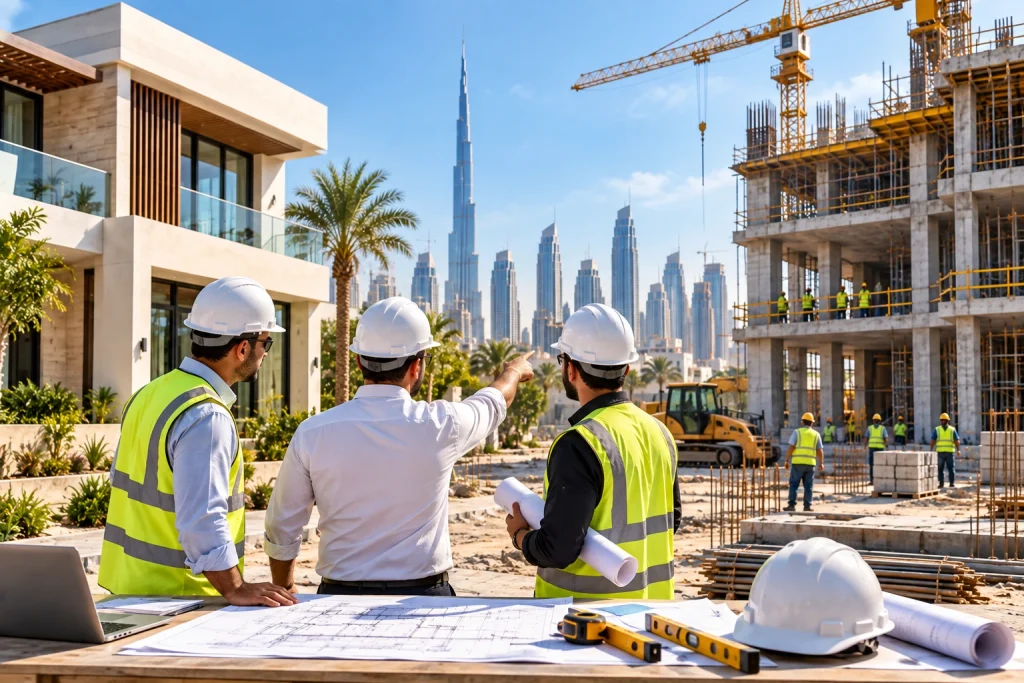
A general construction contractor in Dubai sits in the middle of these activities. Good coordination helps prevent one trade from creating problems for another. Consider something as ordinary as a ceiling.
The architectural design may show lighting positions. Mechanical drawings may show air-conditioning grilles. Electrical drawings may include detectors and other devices. If teams work independently, the completed ceiling can start looking like several people played darts with the drawings. Proper coordination brings these systems together before installation.
Quality Control Must Happen During Construction
Waiting until the final handover to inspect quality creates unnecessary risk. Many important parts of a building eventually disappear behind finishes. Waterproofing gets covered. Electrical cables disappear inside walls or ceilings. Pipes become inaccessible. Structural elements receive architectural finishes.
Professional contractors therefore need quality-control procedures throughout construction. Dubai’s regulatory direction increasingly emphasises building quality beyond initial completion. Law No. 3 of 2026 concerning the Quality and Safety of Buildings defines a completion certificate as confirmation that construction work has been completed according to the building permit, approved plans, Dubai Building Code, and applicable legislation.
The same law also introduces ongoing quality and safety requirements for existing buildings, including periodic maintenance obligations. Good construction quality is therefore not only about making the property look finished. It is about creating a building that continues to function safely.
Construction Safety Is a Legal Requirement
Construction sites contain risks involving heights, machinery, electricity, moving materials, temporary structures, and multiple teams working at the same time. Dubai’s Decree No. 19 of 2025 concerning Safety in Construction Works requires contractors and engineering consultancy firms to comply with the applicable construction safety code. The rules apply across Dubai, including special development zones and free zones.
Dubai Municipality subsequently adopted the updated Construction Safety Guide through Administrative Resolution No. 112 of 2026. Clients should therefore treat safety systems as part of contractor competence. Professional site management should address worker protection, access control, scaffolding, material storage, equipment, housekeeping, and higher-risk activities. A tidy site does not guarantee perfect construction. However, a site where nobody seems to know where the safety equipment went should inspire questions.
Residential and Commercial UAE Projects Need Proper Procurement
Materials can influence quality, cost, programme, and appearance. A contractor may need to procure concrete, reinforcement, blocks, waterproofing systems, cables, pipes, tiles, sanitary fixtures, doors, glazing, equipment, and dozens of other categories. Good procurement involves more than finding the lowest supplier price.
The materials need to match the approved specification. They also need to arrive when construction requires them. Ordering too late can delay work. Ordering too early can create storage problems or expose materials to damage. For important finishes and equipment, clients should understand what brands, models, performance specifications, or approved alternatives the contractor proposes.
Descriptions such as “luxury tiles” or “high-quality fittings” sound pleasant but say remarkably little. Specific specifications make quotations easier to compare.
Why Detailed General Construction Contractor in Dubai Matter
The relationship between the client and contractor needs clear commercial rules. The contract should explain the agreed scope, price structure, payment arrangements, programme, responsibilities, and procedures for changes. Variations deserve particular attention. Clients often change finishes, layouts, fixtures, or other details during construction. Sometimes site conditions also create a legitimate need for additional work.
A good variation procedure records the proposed change, cost, and potential effect on the programme before work proceeds whenever practical. Without that discipline, the final construction account can become a collection of conversations beginning with:“I thought that was included.” Construction already contains enough concrete. The contract should not contain grey areas as well.
How VAT Applies to Construction Services
Clients also need to understand whether quotations include applicable taxes. The UAE Federal Tax Authority’s real-estate guidance states that construction services supplied in the UAE are subject to VAT at 5%, regardless of the type of building under construction.
That treatment of construction services is separate from the VAT rules that may apply when residential or commercial real estate itself is later sold or leased. Ask contractors to make VAT treatment clear in the quotation. A price that excludes VAT and a price that includes it should not sit beside each other in a comparison spreadsheet as though they are identical.
How to Verify a General Construction Contractor in Dubai
Due diligence should begin before signing a construction contract. Dubai Municipality maintains a database of registered contracting companies. It states that contracting companies must hold the relevant economic licence and receive authorisation through the Registration and Licensing Committee after meeting approved contracting standards and registration requirements.
Clients can use this information when checking a potential contractor. Registration should only form one part of the review. Look at relevant completed work, not simply the biggest project in the company’s brochure. Meet the proposed project team. Understand who will supervise the site.
Review the programme, safety procedures, quality-control approach, procurement process, subcontractors, payment schedule, and warranty or post-handover arrangements. The company you hire should suit your project. A contractor may perform excellent work in one construction category without being the best fit for every possible building.
What Happens at Project Handover?
Handover should involve more than cleaning the property and passing over the keys. The contractor needs to complete outstanding works, address defects, support testing, and provide required project information. Dubai Municipality’s building permit framework includes technical site inspections and Completion Certificate procedures. Law No. 3 of 2026 further links the Completion Certificate with compliance with the building permit, approved plans, Dubai Building Code, and applicable legislation.
Depending on the project and contract, owners may also receive warranties, equipment documentation, testing information, approved records, and maintenance guidance. Discuss handover requirements early. Asking everyone to locate years of construction documentation during the final week has a remarkable ability to make grown professionals suddenly very interested in taking annual leave.
General Construction Contractor in Dubai vs Individual Trades: Which Is Better?
Small repair projects may only require an individual specialist. Constructing a building is different. Residential and commercial construction involves interdependent activities. A general contractor provides one central management structure for coordinating the construction works. That does not mean the main contractor personally performs every specialist task.
Subcontractors commonly handle specific packages. What matters is clear responsibility. The client should know who coordinates those subcontractors, who controls the programme, who checks work, and who remains accountable under the construction contract. Without central coordination, the property owner can accidentally become the project manager. That job tends to arrive without a salary.
Final Thoughts
A professional general construction contractor in Dubai can manage the complex process of turning approved designs into a completed residential or commercial property. The contractor should understand Dubai’s regulatory environment, coordinate trades, manage materials, maintain construction safety, control quality, and support the project through inspection and handover.
Dubai Municipality regulates contractor licensing and registration, maintains formal building-permit procedures, and applies the Dubai Building Code. Dubai’s construction safety legislation also creates binding obligations for contractors across the emirate. For clients, the practical approach is straightforward.
Verify the contractor. Review similar projects. Understand the scope. Check the people who will manage the work. Agree materials, costs, payments, changes, quality procedures, and handover requirements before construction becomes complicated. The strongest contractor is not simply the company that can start tomorrow. It is the one that can explain how it plans to reach completion properly.