Professional aluminium and glass work in Dubai can create cleaner lines, introduce more natural light and replace heavy or outdated features with contemporary designs. However, good aluminium and glass work involves more than making everything shiny and transparent.
Dubai’s climate, building regulations, thermal performance requirements, safety considerations and maintenance conditions all influence what works well.The right design can improve appearance while supporting comfort and functionality. The wrong one may look impressive for a few photographs before becoming an expensive lesson in why specifications matter.
Why Are Aluminium and Glass Work Popular in Dubai Properties?
Look around Dubai, and you will see aluminium and glass everywhere. They appear in villas, apartment towers, offices, shops, hotels, and commercial buildings because designers can use them in many ways.
Common applications include:
- Aluminium windows
- Sliding doors
- Entrance systems
- Glass partitions
- Shower enclosures
- Balcony glazing
- Shopfronts
- Curtain walls
- Glass railings
- Pergola glazing
- Aluminium façade features
- Interior glass doors
Aluminium offers designers considerable flexibility because manufacturers can form it into different profiles and finishes. It also has useful resistance to corrosion because aluminium naturally develops a protective oxide layer when exposed to oxygen. The Australian Aluminium Council explains that this surface layer reforms if damaged under normal conditions, although environmental conditions and material specifications still matter.
Glass provides a very different advantage: transparency. Combine the two correctly and you can create slim structural lines with larger visual openings. That combination explains much of their architectural appeal.
1. Aluminium Windows Can Give an Older Property a Cleaner Look
Old window frames can make an otherwise attractive property appear dated. Thick profiles, worn finishes, damaged seals and mismatched colours can distract from both interior and exterior design. Modern aluminium windows in Dubai can create a more streamlined appearance. Depending on the selected system, aluminium profiles can support relatively clean frame lines while offering different finishes and configurations.
Homeowners may choose colours that coordinate with doors, façades, pergolas or other architectural elements. Consistency matters.
A property with black windows, silver balcony frames, brown doors and three unrelated metal finishes can accidentally develop what might politely be called a “collection.” Using a coordinated aluminium finish can create a more deliberate appearance. However, homeowners should not select windows on frame colour alone.
Glass specification, seals, installation and thermal performance matter just as much.
2. Larger Glass Areas Can Introduce More Natural Light
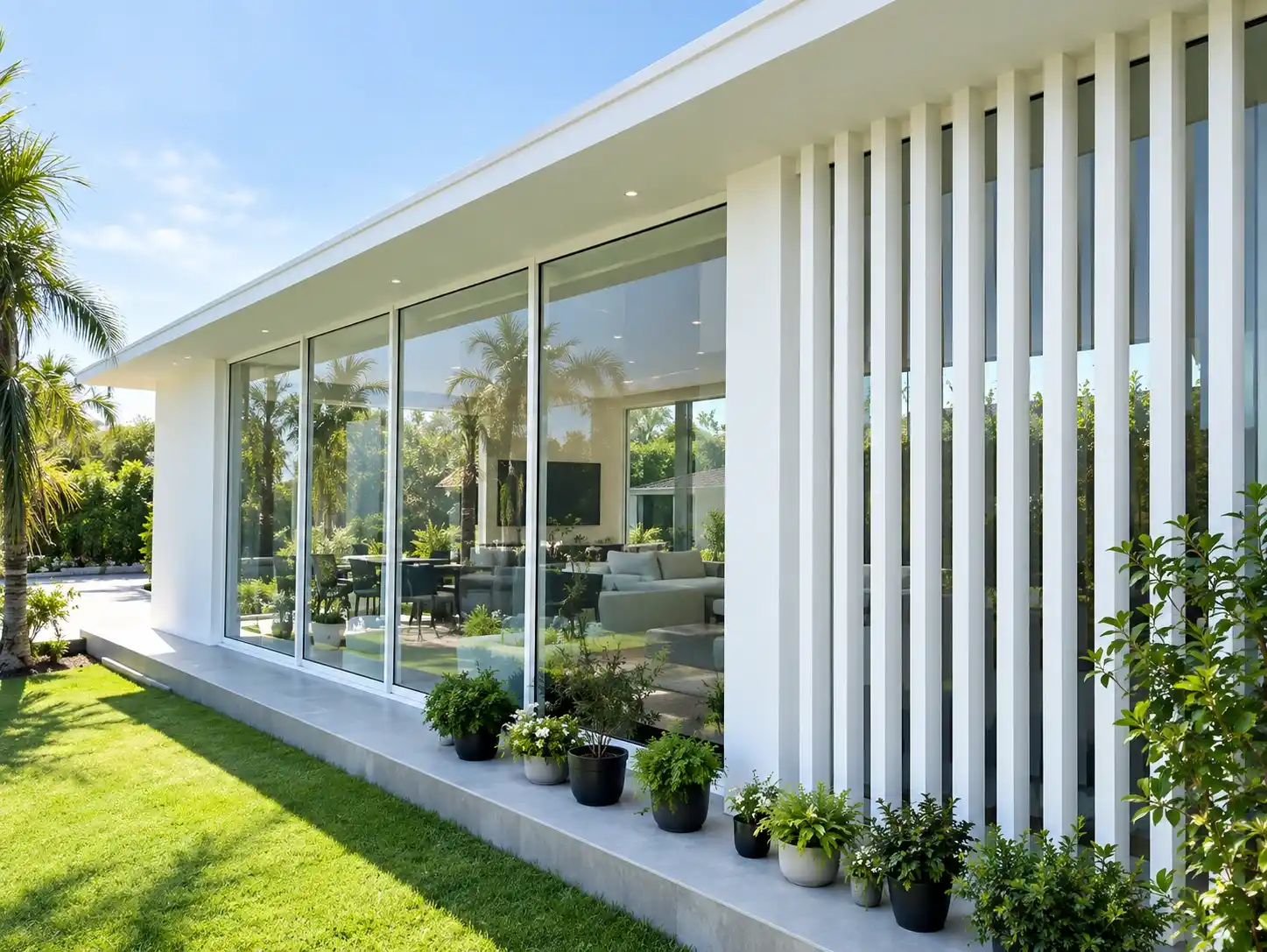
Natural light can change the perception of a room. A darker interior may feel smaller and more enclosed, while carefully positioned glazing can create stronger visual connections between indoor and outdoor spaces. Large sliding doors can make a living room feel connected to a garden or terrace.
Glass partitions can divide an office without completely blocking light. Glazed internal doors can help daylight travel further through a property. But more glass does not automatically mean better design. Dubai receives intense solar exposure, so designers need to balance daylight with heat gain and glare.
Dubai Municipality’s Building Code includes specific glazing calculations and schedules, while its green-building certification requirements assess architectural glass for factors including thermal transmittance, shading coefficient, and light transmittance.
That distinction matters. The goal is useful daylight, not turning your living room into a professionally designed greenhouse.
3. Sliding Glass Doors Can Connect Indoor and Outdoor Spaces
Sliding glass doors work particularly well where properties open onto gardens, balconies, pools or terraces. They can reduce the visual barrier between two spaces and provide wider views than a traditional solid door. For villas, large glazed openings can make the garden feel like part of the living area.
For apartments, they can help maximise views from balconies or terraces. The aluminium frame plays an important role because it supports the glazing, tracks and locking system. When comparing systems, homeowners should look beyond how the sample door slides in a showroom.
Ask about:
- Glass specification
- Aluminium profile system
- Frame finish
- Seals
- Locks
- Rollers
- Drainage
- Installation method
- Thermal characteristics
A door that glides beautifully during the sales demonstration should ideally continue doing so after several years of actual use.
4. Glass Partitions Can Make Interiors Feel More Open
Not all aluminium and glass work belongs outside. Glass partitions in Dubai have become common in offices and increasingly appear in residential interiors. They can separate rooms without creating the same visual weight as solid walls. For example, glass can work between a home office and living space, around a staircase, or as part of a kitchen or dining-area division.
Different levels of privacy remain possible. Designers may use clear, tinted, frosted or patterned glass depending on the room and intended effect. Aluminium frames can also become part of the design. Slim black framing, for example, can create a strong architectural look. Lighter finishes can blend more quietly into surrounding interiors.
The important part is deciding whether the partition should disappear visually or become a feature. Trying to achieve both at once usually produces a confused piece of glass with an identity crisis.
5. Frameless Glass Can Create a Minimal Appearance
Where appropriate for the application, frameless or minimally framed glass can create an especially clean look.
You commonly see it in:
- Shower enclosures
- Internal doors
- Office partitions
- Balustrades
- Entrance features
Reducing visible framing allows the surrounding architecture to take more attention. However, “frameless” does not mean “without engineering.” Glass type, thickness, hardware, fixing methods and structural support need to suit the intended application.
Dubai’s Building Code exists specifically to establish minimum requirements relating to health, safety, welfare, convenience and sustainable development. For safety-critical applications, appearance should therefore follow appropriate technical design rather than replace it. A glass railing is not the place to discover that minimalism went too far.
6. Aluminium and Glass Work in Dubai Can Complement Modern Architecture
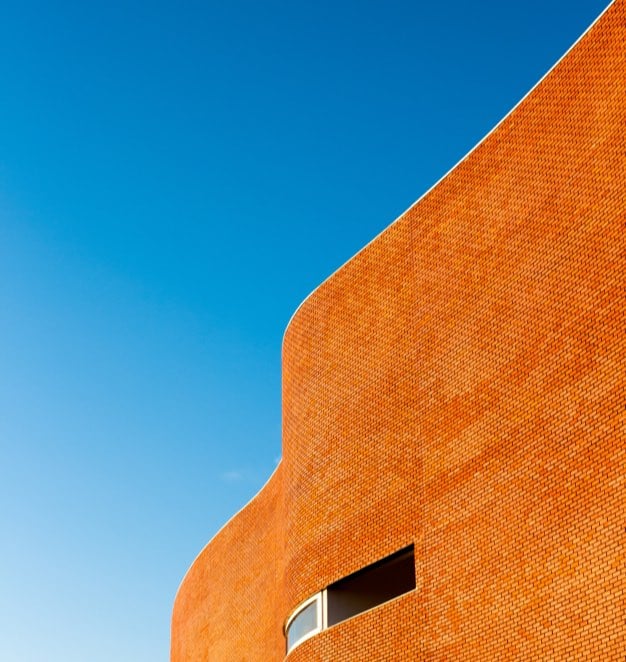
One reason architects like aluminium is the range of available surface treatments. Depending on the chosen product and specification, aluminium can receive anodised or coated finishes in various colours and textures. Anodising strengthens the aluminium’s oxide surface layer and can provide both protective and decorative benefits.
The Aluminum Anodizers Council notes that architectural applications for anodised aluminium include windows and doors and that the process can improve corrosion and abrasion resistance while allowing decorative finishes.
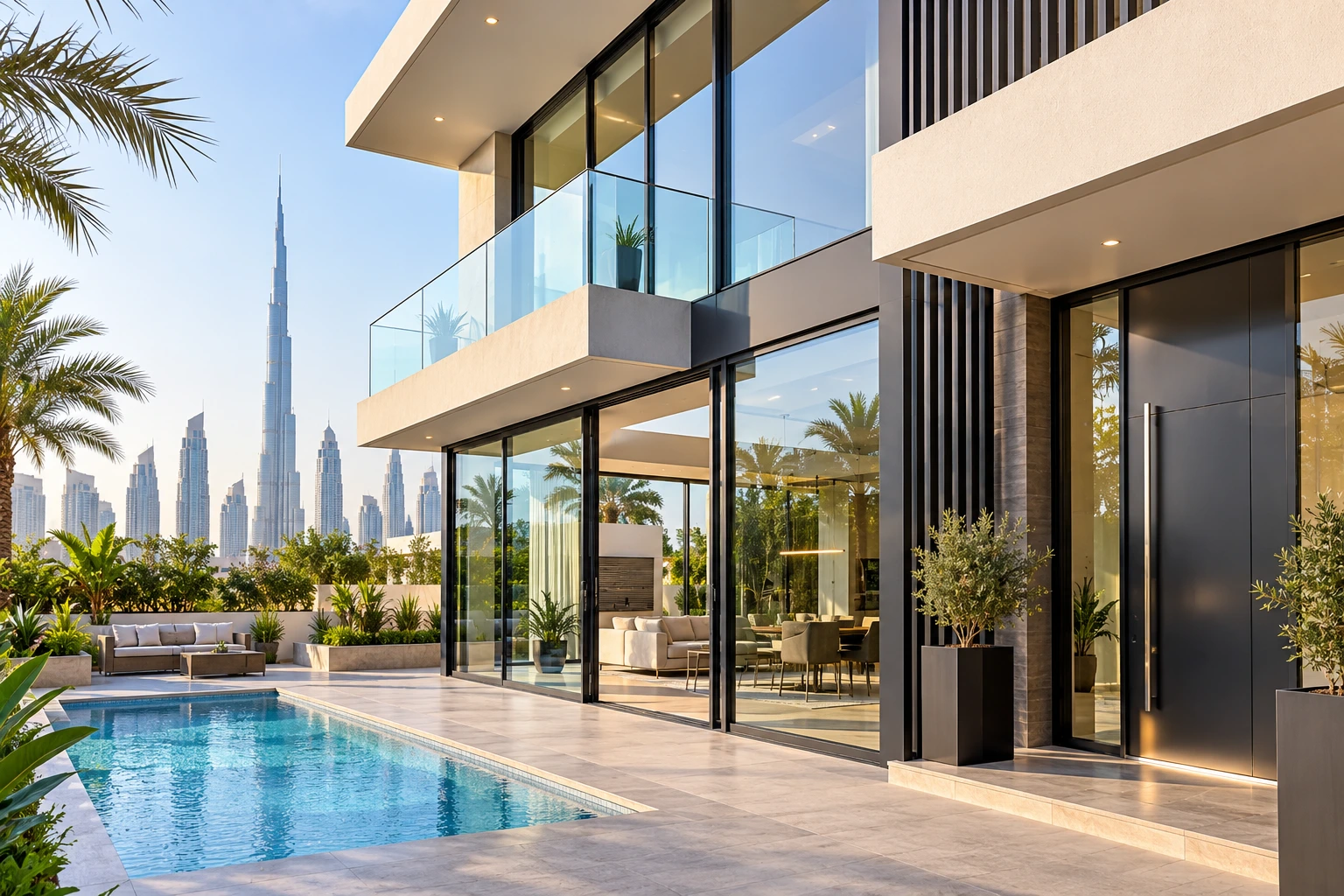
This gives property owners considerable design freedom. Dark aluminium can create strong contrast against light stone or render. Neutral metallic tones can produce a quieter commercial appearance. Wood-effect finishes can introduce warmer visual character where appropriate.
The right choice depends on the architecture. A finish should support the building rather than scream for attention from across the street.
7. Glass Can Modernise Entrances and Shopfronts
Entrances strongly influence first impressions. A worn aluminium door or dated shopfront can make the entire property feel older than it is. New aluminium framing and glazing can create a cleaner entrance with better visual continuity. For commercial properties, glass can also improve visibility into showrooms, reception areas and retail spaces. However, exterior glazing requires more than aesthetic consideration.
Older Dubai green-building requirements already included specific thermal-performance limits for glazed façades and shopfronts, demonstrating that the amount and specification of glass affect building performance. Current Dubai Municipality resources continue to provide glazing schedules and U-value calculations under the Dubai Building Code.
That means a shopfront should not be treated as simply “a big piece of glass.” It is part of the building envelope.
8. Aluminium and Glass Can Create Better Design Consistency
Good property design often comes down to repetition. If your entrance door, windows, balcony features and pergola use related colours and profiles, the property can feel more coherent. This matters particularly during renovation. Owners often replace elements one at a time over many years. Eventually, the building can contain several window styles, unrelated glass colours and different metal finishes.
Professional Aluminium and Glass Work in Dubai can help create a more consistent visual language. That does not require every element to look identical. It means making deliberate choices. A coordinated property usually appears more refined than one assembled from whichever frame colour happened to be available that week.
9. The Correct Glass Can Support Comfort as Well as Appearance
Glass selection deserves serious attention in Dubai. Different glazing systems can have very different thermal and solar characteristics. Dubai’s green-building specifications historically set requirements for thermal transmittance, shading and light transmission depending on the amount and application of glazing.
Dubai Municipality also maintains certification requirements for glazed glass under its green-building framework and lists product-conformity routes for architectural glass.
For homeowners, the practical lesson is simple.
Do not ask only:
“How much does this glass cost?”
Also ask:
“What glass are you supplying?”
Request the specification.
Check whether the contractor is proposing single or insulated glazing where relevant, along with glass type, thickness, coating and performance characteristics appropriate to the project. Two windows may look almost identical while performing very differently.
10. Good Installation Protects the Finished Appearance
Expensive materials cannot compensate for poor installation. Misaligned doors, untidy sealant, visible gaps, scratched profiles and poorly adjusted sliding systems can quickly ruin a premium design. Accurate measurement comes first. The installer then needs to assemble, align, seal and finish the system properly.
Pay attention to small details around corners, joints, handles and transitions between materials. Those details often separate professional-looking work from something that merely looked good from across the room. For exterior installations, correct sealing and drainage also matter because the system must perform as part of the property rather than simply decorate it.
Does Aluminium and Glass Work Need Maintenance?
Yes. Low maintenance does not mean no maintenance. Glass needs cleaning, particularly where dust, fingerprints or water marks remain visible. Sliding tracks may collect dust and debris. Moving hardware can require adjustment. Seals can deteriorate over time.
Aluminium finishes also need appropriate cleaning methods. Avoid assuming that stronger cleaning chemicals automatically produce cleaner frames. Some aggressive products can damage finishes or surrounding materials.
Regular inspection can identify loose hardware, damaged seals or movement before a small issue becomes more disruptive. A five-minute inspection occasionally beats discovering that the balcony door has developed its own interpretation of “closed.”
Do You Need Approval for Aluminium and Glass Work in Dubai?
It depends on the project. Replacing an internal shower enclosure differs significantly from modifying a building façade or changing external windows. External alterations may affect the architectural appearance, building envelope or common property.
Apartment owners and tenants should therefore check with building management, landlords or relevant community authorities before changing exterior windows, balcony glazing or façade elements. For regulated construction work, Dubai Municipality maintains building regulations, permit procedures and the Dubai Building Code.
Do not assume that because a contractor can physically install something, the property automatically permits the change. Check first. Drilling holes is considerably easier than reversing an unauthorised façade modification.
How to Choose an Aluminium and Glass Company in Dubai
Start with the specification, not the sales photograph. Ask the contractor to explain:
- Aluminium profile type
- Glass type and thickness
- Finish
- Hardware
- Seals
- Thermal characteristics where relevant
- Installation method
- Included accessories
- Warranty
- Maintenance requirements
- Approval responsibilities
For products subject to conformity requirements, Dubai Municipality maintains certification frameworks and lists of certified products.You should also compare quotations carefully. A lower price may reflect different aluminium profiles, glass specifications, hardware or installation scope. Make sure you compare equivalent systems before deciding which company offers better value.
Final Thoughts
Professional aluminium and glass work in Dubai can significantly change the visual character of a property. Aluminium windows can create cleaner lines. Glass doors can connect interiors with gardens and balconies. Partitions can divide space while preserving light.
Modern entrances, façades and aluminium finishes can give older properties a more contemporary appearance. But aesthetics should not operate alone. Dubai Municipality’s building framework treats glazing as a technical component of building performance, with requirements and calculations covering factors such as thermal transmittance, shading and light transmission.
That is why the best project balances design with specification. Choose aluminium profiles that suit the architecture. Select glass for its intended location and performance. Use suitable hardware. Check approval requirements. Demand careful installation.
The finished work should look modern without becoming impractical. After all, the best aluminium and glass design should make people notice the property. Not the problems with the windows.