Owning property in Dubai does not end with collecting the keys. Air-conditioning systems run hard, plumbing connections age, sealants deteriorate, doors move out of alignment, and a tiny water leak can quietly become a considerably larger problem. That is why regular general property maintenance in Dubai matters. Good maintenance protects the condition, safety, appearance, and functionality of a home or commercial property.
More importantly, it helps owners spot small defects before they develop expensive ambitions. Dubai’s regulatory direction increasingly reflects this approach. Law No. 3 of 2026 concerning the Quality and Safety of Buildings aims to preserve structural integrity, maintain buildings’ suitability for use, and reduce risks through timely and periodic maintenance. So, where should property owners start?
Why Is Property maintenance in Dubai Important?
Maintenance is not simply about keeping walls freshly painted. A property contains interconnected systems: electricity, water, air conditioning, drainage, waterproofing, doors, windows, finishes, and often outdoor equipment. When one system develops a problem, damage can spread. A slow plumbing leak may affect cabinets, ceilings, paint, flooring, or neighbouring rooms. A blocked AC filter can reduce airflow. Failed sealant can allow moisture into areas that should remain dry.
Dubai Land Department also includes the quality of finishes and maintenance among the criteria used in its Smart Rental Index building classification system, alongside technical characteristics, location, services, and facilities. That does not mean every maintenance job directly increases property value. It does show that property condition forms part of the wider quality picture.
1. Make Preventive Property maintenance in Dubai Your Starting Point
The best maintenance visit often happens before anything breaks. Preventive maintenance means inspecting systems periodically, identifying deterioration, and correcting problems while they remain manageable.
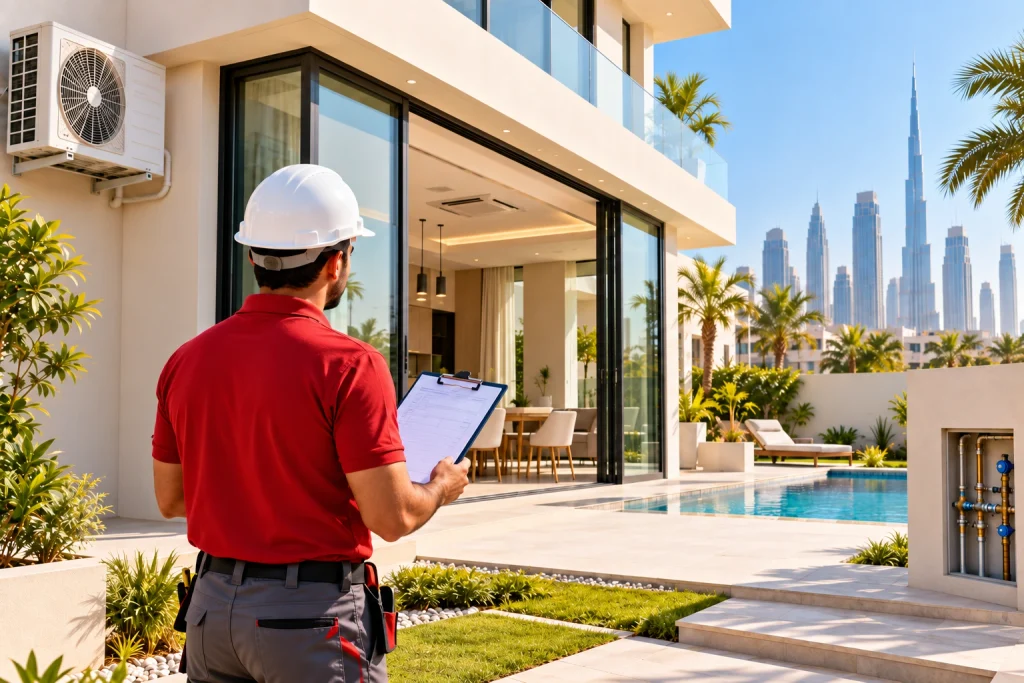
DEWA specifically encourages households to conduct regular inspections and preventive maintenance of internal water connections, tanks, appliances, and utility systems. Its 2026 guidance says early detection can reduce the risk of sudden faults and water leaks. Create a simple maintenance schedule rather than relying on memory.
You might divide checks into:
- Monthly visual checks
- Seasonal inspections
- Six-monthly servicing
- Annual condition reviews
- Manufacturer-specific equipment maintenance
The exact schedule depends on the property and equipment. The main principle is simple: do not wait for your ceiling to start dripping before remembering that plumbing exists above it.
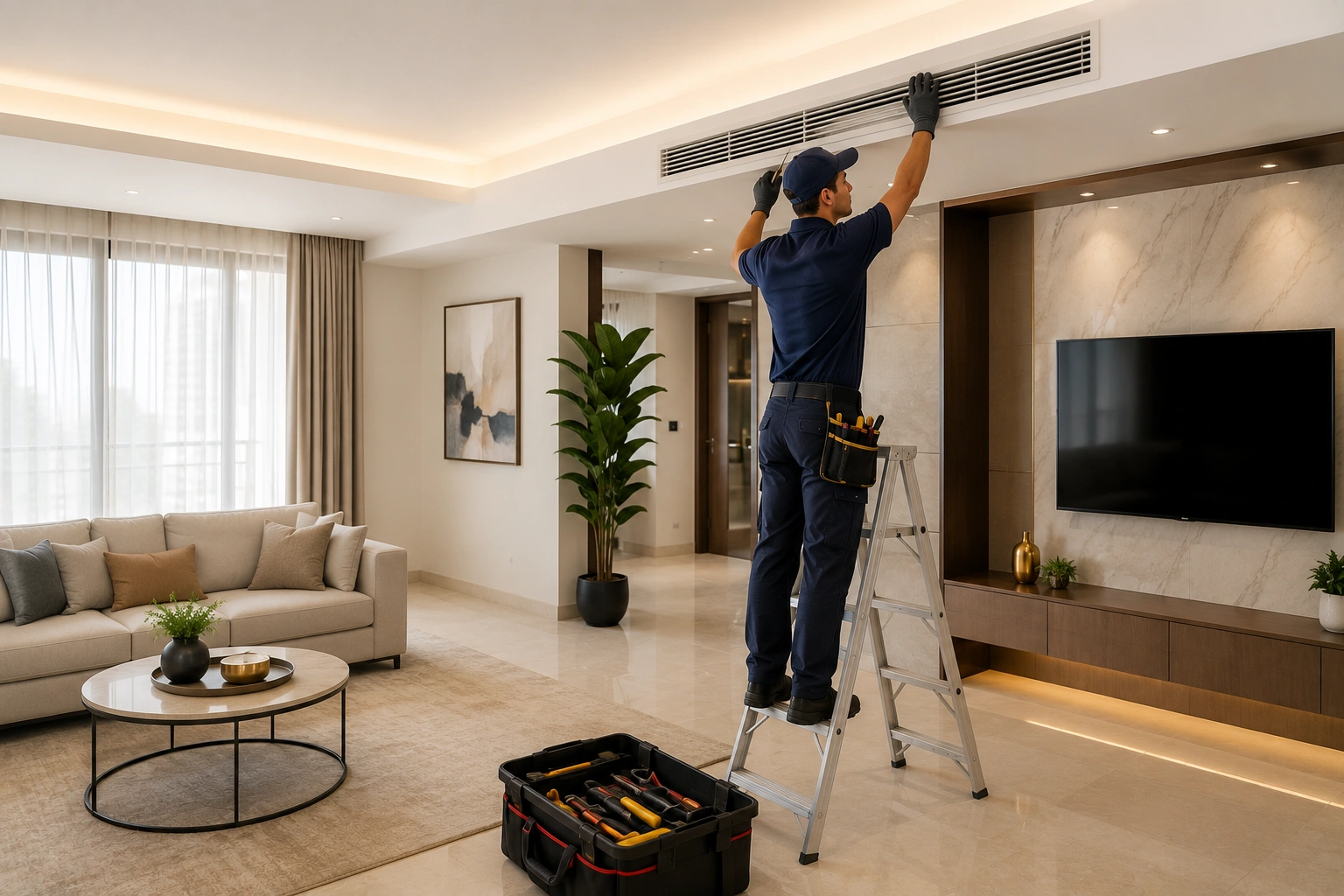
2. Take Air-Conditioning Maintenance Seriously
Air conditioning plays a major role in everyday comfort in Dubai. DEWA identifies air conditioning as one of the largest contributors to household electricity use during summer and recommends cleaning AC filters regularly. It also advises keeping doors and windows closed while cooling and setting thermostats to around 24°C during summer for efficient operation.
Property owners should monitor:
- AC filters
- Airflow
- Unusual smells
- Unexpected noises
- Water dripping from indoor units
- Thermostat performance
- Cooling consistency
Dirty filters can restrict normal airflow and reduce efficiency. DEWA’s cooling guidance recommends regular filter cleaning, particularly during summer. For more complex faults, use a competent technician. Cleaning a filter is one thing. Opening an unfamiliar AC system armed with a screwdriver and confidence from a three-minute video is another.
3. Check for Water Leaks Regularly
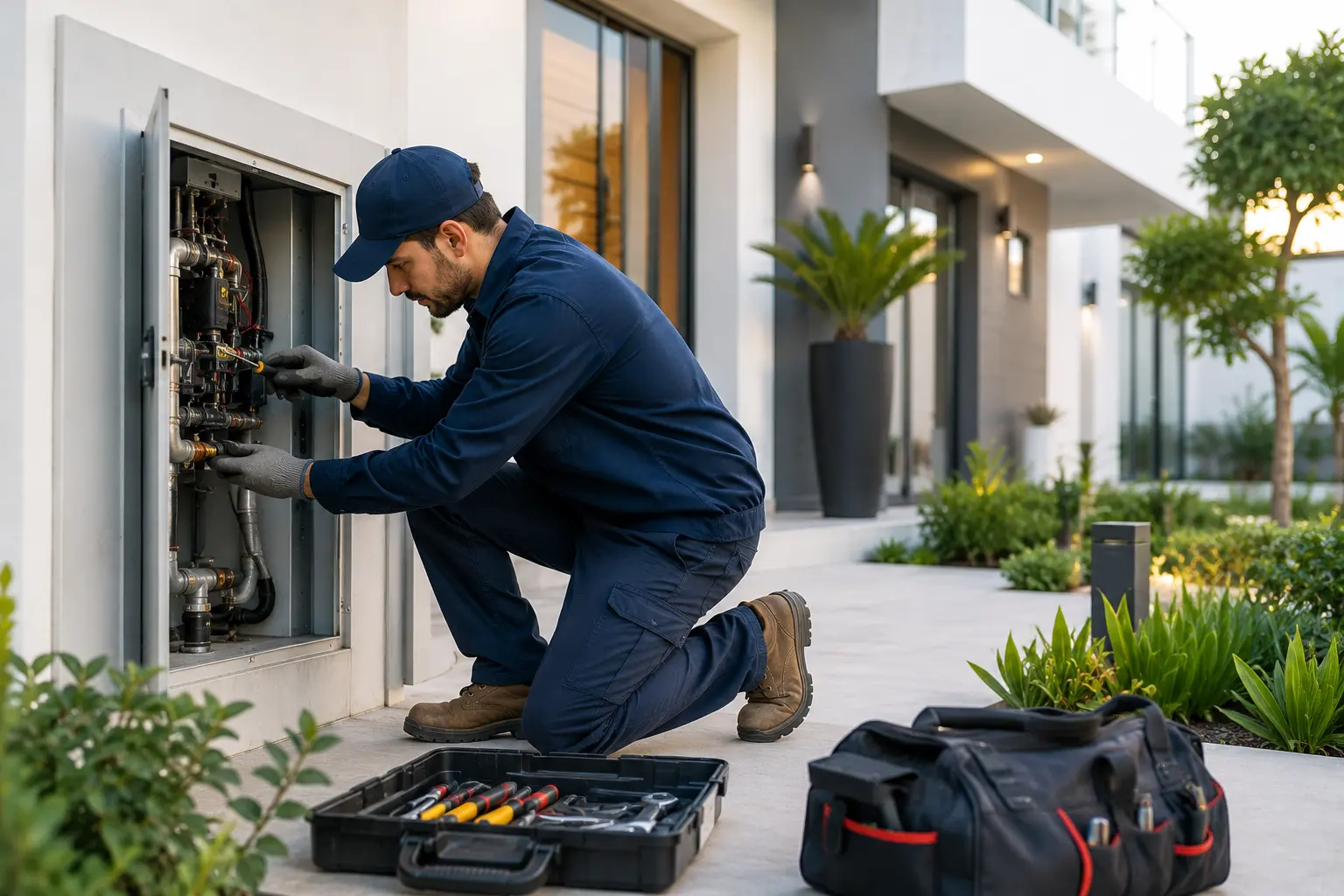
Water leaks deserve immediate attention. DEWA identifies bathrooms, kitchens, water tanks, swimming pools, pipes, toilet tanks, taps, and water heaters as common places where internal leakage can occur. Visible warning signs can include water marks on walls, roofs, and floors or moisture around washing machines and other connections.
DEWA also provides a High Water Usage Alert service that can help customers identify unusual consumption that may indicate internal leakage after the meter. If your water consumption suddenly rises without an obvious explanation, investigate. Do not simply admire the bill and wonder which family member has secretly installed a swimming pool.
DEWA states that customers or property owners remain responsible for internal water connections after the meter, while DEWA’s responsibility covers connections up to the meter. That makes internal plumbing inspection an important part of property maintenance.
4. Maintain and Clean Water Tanks in UAE
Water tanks should not disappear from your maintenance plan simply because they sit somewhere you rarely visit. Dubai Municipality recommends cleaning and disinfecting domestic water tanks and water systems at least every six months using companies approved by Dubai Municipality. It also advises regular maintenance to prevent contamination and maintain the proper operation of water systems.
Property managers and homeowners should keep records of tank cleaning dates. During maintenance, technicians may also check connections and the condition of the tank. DEWA notes that leaks can result from deterioration of the tank body, damaged connections, improper positioning, or lack of maintenance.
Water tanks are not particularly glamorous. Neither is explaining why nobody remembered to maintain one.
5. Watch Bathrooms, Kitchens, and Wet Areas in UAE
Wet areas combine water supply, drainage, sealants, cabinetry, tiles, and waterproofed surfaces. That combination deserves attention.
Inspect:
- Sealant around sanitary fixtures
- Grout condition
- Under-sink connections
- Flexible hoses
- Floor drainage
- Cabinet bases
- Areas around washing machines
- Walls adjacent to showers
- Ceilings below bathrooms
Do not cover visible dampness with fresh paint until someone identifies the cause. Paint can improve appearance.It has yet to develop meaningful plumbing skills. Dubai Municipality maintains technical requirements covering waterproofing products and systems used in construction.
If maintenance reveals a genuine waterproofing failure rather than a simple leaking fitting, seek professional assessment instead of repeatedly treating the visible symptom.
6. Inspect Electrical Systems and Warning Signs in UAE
Electrical problems require caution. Property owners should pay attention to repeated circuit trips, damaged sockets, loose switches, burning smells, unusual heat, flickering lights, or equipment behaving abnormally. DEWA’s current household guidance advises residents to arrange periodic maintenance of electricity and water systems through specialised technicians.
Do not attempt technical electrical repairs unless you have the relevant competence. A loose cabinet hinge invites experimentation. An electrical distribution board does not. For landlords and commercial properties, maintaining service records can also help track recurring faults and provide useful information to future technicians.
7. Check Doors, Windows, and Seals working Properly or not
Doors and windows experience everyday use but often receive attention only when they stop working properly.
Check:
- Hinges
- Locks
- Handles
- Sliding tracks
- Rollers
- Rubber seals
- Frame alignment
- Gaps around openings
DEWA recommends caulking and weather-stripping doors and windows that leak air because poorly sealed openings allow cooled air to escape. That makes seal maintenance relevant to both building condition and cooling efficiency. Sliding aluminium doors also benefit from clean tracks and properly adjusted rollers.
Waiting until a sliding door requires the strength of a competitive weightlifter before servicing it is technically an option. It is simply not the best one.
8. Do Not Ignore Exterior and Roof Areas During Property maintenance in Dubai
Villa owners should include exterior areas in their maintenance routine. Inspect roofs, terraces, balconies, parapets, drains, exterior sealants, external walls, and other exposed areas.
Look for:
- Cracks
- Failed sealant
- Loose finishes
- Blocked drains
- Water staining
- Deteriorated coatings
- Damaged joints
You do not need to panic every time you see a hairline mark. You do need to distinguish cosmetic defects from problems that require technical investigation. Dubai’s 2026 building-quality law places responsibility on building owners to conduct periodic maintenance and rectify defects that may create risks to structural safety, lives, property, or surrounding buildings.
If you suspect structural movement or significant deterioration, involve an appropriate engineering professional rather than treating the problem as ordinary decoration.
9. Keep Pest Problems Under Control in UAE
Property maintenance also includes hygiene and pest management. Small gaps, food waste, standing water, and neglected service areas can create conditions that attract pests. Dubai Municipality provides public-health pest-control services and regulates pest-management activities within the emirate.
Homeowners can reduce common risks by:
- Removing standing water
- Keeping waste areas clean
- Sealing unnecessary openings
- Repairing leaks
- Keeping kitchens hygienic
- Monitoring exterior drainage
- Using qualified pest-control providers when necessary
Treating the cause matters. Spraying repeatedly while leaving the water leak or access point untouched merely gives everyone involved a recurring appointment.
10. Repair Small Carpentry and Joinery Problems while Property maintenance in Dubai
Cabinet hinges, wardrobe doors, drawer runners, wooden doors, and built-in furniture naturally experience wear. Small problems often remain inexpensive when addressed early. A loose hinge may only need adjustment. Leave it long enough and the screws can damage the board, the door may become misaligned, and a minor repair becomes a component replacement.
Check frequently used cabinetry in kitchens and bathrooms particularly carefully because these areas can also reveal moisture damage. Swollen boards, peeling edges, or unusual cabinet movement may indicate exposure to water. Do not assume every damaged cabinet needs replacing. First identify why the damage occurred.
11. Maintain Paint and Finishes for Protection, Not Just Appearance
Paint performs an aesthetic role, but coatings can also protect surfaces.
Watch for:
- Peeling
- Bubbling
- Cracking
- Staining
- Discolouration
- Powdery surfaces
Before repainting, investigate unusual deterioration. A recurring brown stain on a ceiling is not asking for another coat of white paint. It is asking you to find the water. Exterior coatings may also need periodic attention depending on exposure, surface preparation, and product specification. Use appropriate materials and follow manufacturer guidance rather than assuming one coating works everywhere.
12. Keep Property maintenance in Dubai Records
Good maintenance creates information.
Keep records of:
- AC servicing
- Plumbing repairs
- Water-tank cleaning
- Electrical work
- Pest treatments
- Waterproofing repairs
- Equipment replacements
- Warranties
- Contractor invoices
For landlords and property managers, these records help identify recurring faults. If the same pump, AC unit, or bathroom requires repeated repairs, the service history may show that continued patching no longer makes financial sense.
Dubai’s new building-quality framework also introduces a broader digital approach to building information, assessments, quality, and maintenance. Even for an individual villa or apartment, organised records make future maintenance easier. Memory becomes surprisingly unreliable when someone asks which technician replaced a valve eighteen months ago.
Should You Use an Annual Maintenance Contract?
An annual maintenance contract, often called an AMC, can make sense for properties that need regular technical attention. A maintenance contract may cover scheduled inspections and selected repair or emergency services, depending on the provider and package. Do not choose one simply because it has the longest checklist.
Read what it actually includes.
Check:
- Number of scheduled visits
- AC servicing scope
- Plumbing coverage
- Electrical coverage
- Emergency response
- Included labour
- Replacement-part exclusions
- Call-out charges
- Working hours
- Warranty on repairs
An impressive 60-point checklist means little if 42 points involve someone looking briefly at something and ticking a box. Choose a plan around your property’s actual needs.
How Often Should You Inspect Your Property?
There is no universal schedule for every component. Equipment manufacturers, building type, property age, usage, and previous maintenance all affect frequency. However, owners should combine routine visual inspections with scheduled professional maintenance.
Dubai Municipality’s new regulatory framework makes periodic maintenance a central part of long-term building quality and safety, while DEWA repeatedly encourages preventive checks of water and electricity systems.
The important principle is consistency. A property should not need to develop a dramatic symptom before anyone pays attention.
Does Property maintenance in Dubai Help Protect Property Value?
Maintenance does not guarantee a particular resale price or rental return. Property value depends on location, size, supply, demand, amenities, building type, and many other factors. However, maintenance clearly influences condition and presentation.
Dubai Land Department’s Smart Rental Index classification system specifically considers quality of finishes and maintenance when assessing buildings, together with technical characteristics and services. That makes routine maintenance part of responsible property ownership rather than an optional cosmetic exercise.
Final Thoughts
Effective property maintenance in Dubai starts before something fails. Service the air conditioning. Check internal plumbing. Watch for leaks. Maintain water tanks. Inspect electrical systems, doors, windows, exterior areas, waterproofing, and finishes. Keep records and call qualified professionals when work moves beyond simple household maintenance.
Dubai’s 2026 building-quality law places increasing emphasis on periodic maintenance, structural integrity, safe building systems, and continued suitability for use. DEWA also encourages preventive maintenance and early detection of water and electricity problems.
The goal is not to create a property where nothing ever goes wrong. Buildings contain too many moving parts for that promise to make sense. The goal is to catch problems while they are still small, manageable, and considerably less interested in your bank account.
Good maintenance rarely creates dramatic before-and-after photographs. It simply helps prevent your property from needing them.